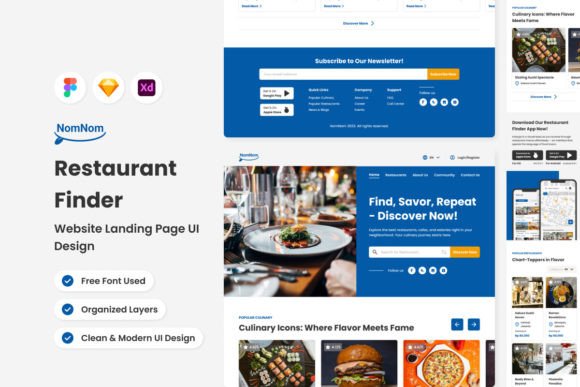
NomNom V2: A Landing Page That Serves Up Success
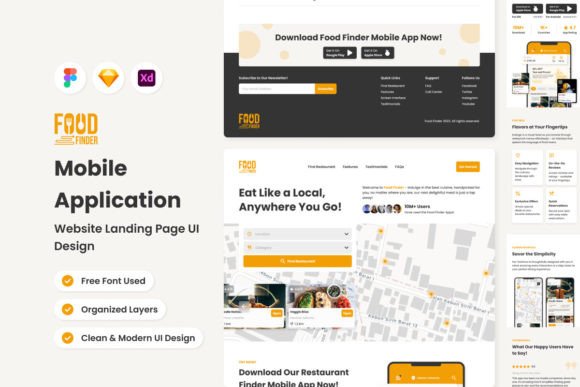
First impressions in the digital space are like the aroma of a freshly baked good—they either draw people in or leave them walking past. For any food delivery app, the website landing page is that critical first whiff. It’s the handshake, the menu, and the maître d' all rolled into one. A clunky, confusing, or visually uninspired page can turn potential hungry customers away before they’ve even seen what you’re offering. This is where a thoughtfully designed template becomes less of a shortcut and more of a strategic asset. The NomNom - Mobile App Website Landing Page V2 isn’t just a pretty face; it’s a meticulously crafted framework designed to convert casual browsers into loyal app users, blending aesthetic appeal with ruthless efficiency.
More Than a Template: A Blueprint for Brand Storytelling
Think of your landing page as the opening chapter of your brand’s story. The NomNom V2 template understands this narrative role. Its visual design is intentionally crafted to evoke the right feelings—speed, convenience, quality, and deliciousness. The layout uses clean lines, ample white space, and strategic pops of color to guide the visitor's eye exactly where it needs to go: from a compelling headline to a mouth-watering hero image, and straight to a clear, irresistible call-to-action button. This isn’t about random artistic flair; it’s about visual communication with a purpose. The design elements work in concert to build trust and desire, making the decision to download the app feel like the natural next step.
For designers and small business owners, this approach offers a masterclass in applied branding. The template demonstrates how to balance personality with professionalism. You get the playful, approachable vibe essential for a food brand without sacrificing the clean, trustworthy interface users expect from a tech service. It shows how to use typography not just for readability, but for hierarchy and mood, and how to select imagery that tells a story of satisfaction and ease. Studying its structure provides practical insights you can apply to your own projects, whether you're designing a landing page for a new SaaS product or a local bakery's online ordering system.
Practical Magic: Where Design Meets Daily Workflow
The true value of any design asset lies in its utility. The NomNom template shines here by being built for real-world use, not just for a portfolio screenshot. Its well-organized layers and global styles are a quiet revolution for your workflow. Imagine needing to swap out the primary brand color from a vibrant orange to a rich burgundy. Instead of hunting through dozens of individual elements, you change it once in the style guide, and it updates across the entire desktop and mobile mockup. This level of organization saves hours, reduces frustration, and minimizes the risk of inconsistencies—a common headache in fast-paced projects.
This adaptability makes it a powerful tool for a variety of creative professionals. A marketing team can quickly mock up A/B test variations for a new campaign. A freelance web designer can present a polished, interactive prototype to a client, drastically improving communication and approval rates. An entrepreneur launching their first app can establish a professional online presence from day one, building credibility that attracts both users and potential investors. The included open-source fonts and free vector icons further enhance this practicality, ensuring you have a complete, legally sound toolkit to start customizing immediately without additional hidden costs.
Building Cohesion Across Every Touchpoint
A strong brand identity is consistent across every interaction a customer has with it. The design language established in the NomNom V2 landing page provides a perfect foundation to extend that identity across all your marketing assets. The color palette, typography choices, and overall visual tone can be directly translated into your social media graphics, email newsletter headers, and even the app's UI itself. This creates a seamless experience for the user, reinforcing brand recognition at every turn. When the Instagram ad looks and feels like the landing page, which in turn mirrors the app's interface, you build a cohesive world that is easy to trust and remember.
This principle of visual consistency is critical for audience engagement. It subconsciously communicates reliability and attention to detail. For instance, the font pairings suggested in the template—likely a combination of a clean, modern sans-serif for body text with a more distinctive display font for headlines—can be carried into your blog post graphics or YouTube thumbnails. Maintaining this typographic discipline ensures your content is immediately recognizable as yours, even without a logo present. It’s a subtle but powerful way to cut through the noise of crowded feeds and build a dedicated following that resonates with your brand's specific aesthetic.
Key Considerations Before You Customize
While the template provides an exceptional starting point, a thoughtful customization process is what will make it uniquely yours. Here are a few practical points to consider as you dive in:
- Align Design with Your Specific Goals: Is your app about gourmet meal kits, rapid fast food, or healthy diet plans? Adjust the imagery, color psychology, and even the font's tone to match. A playful, rounded typeface might suit a family-oriented service, while a sleek, minimalist font could better convey a premium, chef-driven brand.
- Prioritize Readability Above All: No matter how beautiful a font is, if it causes eye strain on a mobile screen, it fails. Test your chosen typefaces at small sizes, particularly in the mobile version of the template. Ensure there is sufficient contrast between text and background colors. The hierarchy should be clear: headlines should grab attention, but body text must be effortless to read.
- Test Your Font Pairings Ruthlessly: Don’t just assume two fonts will work together. Place them side-by-side in actual sentences and headlines. Check for visual harmony—do they complement each other or compete? A common pitfall is pairing two very expressive display fonts. Often, the best partnership is between a strong personality font and a neutral, highly legible workhorse.
- Understand the Licensing: The template specifies that all images are for preview only. This is a crucial reminder. While the design file is yours, any final assets you use, especially photography, must be properly licensed for commercial use. The same diligence should be applied to any additional fonts or icons you might add beyond what’s included. Always verify the license to avoid legal issues down the road.
Ultimately, a resource like the NomNom - Mobile App Website Landing Page V2 is about empowerment. It gives you a professionally engineered canvas to present your food delivery app in the best possible light, saving you time and providing a proven structure for conversion. But the real magic happens when you infuse it with your unique brand voice, strategic goals, and understanding of your audience. It’s a tool that, when used thoughtfully, can help you serve up a digital experience that’s as satisfying as the food you deliver.